Archiv der Kategorie: Allgemein

The Translation Paradox: When Better Technology Creates More Work

Rethinking productivity, quality and the human factor in AI-assisted translation

Translation technology has made remarkable progress. Translation memories, machine translation, AI-assisted tools and increasingly sophisticated workflows promise faster production, greater consistency and lower costs.

And in many situations, these technologies genuinely help.

Yet a question deserves more attention: Does technological progress always translate into greater efficiency in the real working lives of professional translators?

For many language professionals, the answer is more complicated than productivity figures might suggest.

The challenge is not simply whether a tool can produce a suggestion faster. It is whether the entire workflow enables translators to deliver the right result, at the required level of quality, within a realistic amount of time.

The productivity paradox

In translation, productivity is often associated with the number of words processed within a given period. Translation memories offer matches, machine translation generates drafts, and AI tools suggest terminology, phrasing and revisions.

These capabilities can reduce the time needed for certain tasks. Research into machine translation post-editing and translation-memory use has documented productivity benefits in specific contexts, while also highlighting the importance of output quality and the effort required to correct it.

For example, Guerberof Arenas examined productivity and quality in a professional localisation project. The findings suggested that, under the conditions studied, translators could achieve higher productivity when working with machine-translated output than when translating without it. The results also showed that the relationship between productivity and quality depends on the type of assistance provided.

More recently, a real-world case study by Martikainen et al. (2025) examined the implementation of GPT-4 in an in-house translation team in the Finnish social and healthcare sector. Post-editing was, on average, 14% faster than translating from scratch. However, individual productivity changes ranged from a 2% decrease to an improvement of 102%.

The study also identified challenges involving inconsistent terminology, insufficient document-level context and limited system customisation.

These findings illustrate an important distinction: measurable productivity gains are possible, but they are not necessarily consistent across translators, texts or working environments.

The difficulty arises when the speed of generating or processing text is treated as a reliable measure of the efficiency of the entire translation process.

A suggestion may appear instantly. Evaluating whether it is accurate, appropriate and consistent with the client’s requirements can take considerably longer.

The time saved at one stage of the process may create additional work at another.

This does not mean that translation technology is ineffective. It means that productivity needs to be assessed across the complete workflow, rather than through a single metric.

The hidden work behind a match

Translation memories are a familiar example.

A high match percentage can be useful, but it does not automatically establish that a segment is suitable in its current context. A sentence may be identical to one stored previously while the surrounding text, intended meaning, terminology or communicative purpose has changed.

Even a 100% match may therefore require verification.

Research by Screen examined the effects of Translation Memory fuzzy matches on the translation process. The study found that correcting and adapting these matches could increase productivity, but also involved longer initial reading times and more self-revision than manual translation.

This is an important distinction: a match can save time in one respect while changing the nature and distribution of the work involved.

The same principle applies to machine-translated text and AI-generated suggestions. Fluent language can create an impression of reliability, but fluency alone does not establish factual accuracy, contextual appropriateness or compliance with client-specific terminology.

The translator’s task is not simply to accept or correct a suggestion. It is to determine whether the suggestion should be used at all.

This judgement is an essential part of professional translation. Yet it can be difficult to capture in productivity measurements that focus primarily on word counts, match rates or processing speed.

Research into post-editing also demonstrates that the effort involved depends on the quality of the output and the nature of the task. In her review of the research, Koponen highlights the different dimensions of post-editing effort and the conditions that influence whether machine translation actually reduces the work required.

More recent research by Sarti et al. (2025) examined how word-level quality estimation tools influence professional post-editing. In a study involving 42 professional post-editors across two translation directions, the researchers found that the usefulness of automatically highlighted potential errors depended on factors such as domain, language and the speed of individual editors.

Their findings point to a relevant gap between the technical accuracy of an automated tool and its practical usefulness in a professional workflow.

When reference material becomes a bottleneck

Another challenge lies in the information surrounding a translation project.

Clients may provide extensive reference documents, terminology lists, previous translations, style guides and project-specific instructions. These resources are valuable: they help establish consistency and clarify expectations.

However, their usefulness depends partly on how accessible they are within the actual workflow.

If relevant information is scattered across files, platforms, email threads or lengthy reference packages, translators may have to interrupt their work to locate the right passage, confirm a term or determine which instruction takes precedence.

The problem is not necessarily a lack of information. It may be the difficulty of retrieving the right information at the right moment.

These interruptions can turn an apparently streamlined process into a sequence of small but time-consuming research and verification tasks.

Better integration of reference material, searchable documentation, clearer terminology management and accessible client instructions could therefore improve efficiency as much as faster text generation.

The human factor is not an optional extra

The more automated a workflow becomes, the more important it is to define what human review is expected to accomplish.

Post-editing is not a single, uniform activity. The required level of intervention depends on the purpose of the translation, the quality of the machine output, the subject matter and the quality standard agreed with the client.

A text intended for internal understanding may require a different level of revision from a text intended for publication, legal use or communication with customers.

Research has shown that post-editing can improve productivity in particular circumstances, but that poor output may require substantial effort.

A 2025 study by Sun, Wang and Jia (2025) compared post-editing and human translation in Chinese-English and English-Chinese translation. The researchers found that post-editing generally offered advantages in speed and output quality in their experimental setting. However, these advantages differed depending on translation direction. The study highlights why productivity assumptions should take language direction and working conditions into account.

The way translators interact with technology also matters. Briva-Iglesias, O’Brien and Cowan (2023) compared traditional and interactive post-editing in a study involving professional translators. Their findings suggested that translators preferred interactive post-editing, partly because it gave them greater control over their interaction with machine translation. The study also found productivity benefits for the interactive approach under the conditions examined.

This matters because efficiency cannot be understood solely as speed. It also involves the effort required, the reliability of the result and the conditions under which professionals can exercise their judgement.

The human contribution should not be reduced to a final check of text that has already been assumed to be correct. Professional review is part of how the quality of the result is established.

When deadlines and expectations fail to adapt

Technology can make it possible to process larger volumes of text. But when increased technical capacity automatically leads to shorter deadlines, higher output expectations or reduced budgets, the benefits may not be distributed evenly.

The time needed to verify terminology, investigate ambiguity, consult references and review potentially misleading suggestions does not disappear simply because a tool generates text more quickly.

If the time allocated to these tasks is insufficient, the risk is that important checks are missed or performed under unnecessary pressure.

This is not an argument against efficiency or innovation. It is a reason to distinguish between a tool’s technical capacity and the realistic capacity of a complete quality-controlled workflow.

A process that produces more words but leaves too little time for appropriate verification may look productive while failing to achieve the intended quality consistently.

Rethinking what we measure

If the industry wants to understand whether translation technology is improving productivity, it needs to look beyond the number of words processed.

A more complete assessment could consider:

  • Total effort: How much time is spent on translation, post-editing, research, terminology checks and final review?
  • Quality of the result: Does the output meet the agreed requirements and serve its intended purpose?
  • Information accessibility: Can translators find the right reference material and instructions without unnecessary interruptions?
  • Workflow design: Are tools, deadlines and quality requirements aligned with the actual work involved?
  • Professional experience: Do translators have sufficient time, control and information to make sound decisions?

These questions do not diminish the value of technology. They help identify where it creates genuine benefits and where the surrounding process needs to improve.

They can also help clients, language service providers, project managers and technology developers make better-informed decisions about how translation work is organised.

Technology should improve the process, not just accelerate the output

The future of professional translation will undoubtedly involve increasingly capable AI systems and more integrated technological workflows.

The important question is how these developments are implemented.

Technology can support translators by reducing repetitive work, improving access to terminology, helping identify inconsistencies and making relevant information easier to retrieve. But these benefits depend on thoughtful implementation, suitable quality criteria and realistic expectations.

The European Commission’s Directorate-General for Translation provides an interesting example of how technological development and professional language services can coexist. Its work combines high-quality translation, editing services and AI-based multilingual services such as eTranslation. The Commission’s description of the DGT’s responsibilities illustrates that technology is one part of a broader language-service infrastructure.

The objective should not be to make translators work faster at any cost. It should be to create workflows in which technology genuinely reduces unnecessary effort while preserving the time and judgement needed to produce reliable translations.

That requires more than better tools. It requires a better understanding of the work those tools are intended to support.

A question worth discussing

The debate about AI and translation often focuses on what technology can now do. We should also examine what happens to the work around it.

Are we measuring productivity in a way that reflects the complete translation process? Are reference materials and instructions accessible when they are needed? Do deadlines account for the verification that quality requires?

And perhaps most importantly:

When translation technology becomes faster, are our workflows becoming more efficient, or are we simply moving the work somewhere else?

These questions deserve a constructive, evidence-based discussion involving translators, project managers, language service providers, clients and technology developers.

Because technological progress is most valuable when it improves not only the speed of production, but also the quality, reliability and sustainability of the work.


Selected references

The following sources are listed in order of their relevance to the article’s central themes: real-world AI productivity, post-editing effort, Translation Memory, human interaction and professional translation quality.

  1. Martikainen, M., Smolander, K., Sanmark, J., & Sanmark, E. (2025). “Evaluation of Generative Artificial Intelligence Implementation Impacts in Social and Health Care Language Translation: Mixed Methods Case Study.” JMIR Formative Research, 9, e73658.
    https://doi.org/10.2196/73658
  2. Sarti, G., Zouhar, V., Chrupała, G., Guerberof-Arenas, A., Nissim, M., & Bisazza, A. (2025). “QE4PE: Word-level Quality Estimation for Human Post-Editing.” Transactions of the Association for Computational Linguistics, 13, 1410–1435.
    https://doi.org/10.1162/tacl.a.46
  3. Sun, S., Wang, H., & Jia, Y. (2025). “Direction matters: Comparing post-editing and human translation effort and quality.” PLOS ONE, 20(7), e0328511.
    https://doi.org/10.1371/journal.pone.0328511
  4. Guerberof Arenas, A. (2014). “Correlations between productivity and quality when post-editing in a professional context.” Machine Translation, 28(3–4), 165–186.
    https://doi.org/10.1007/s10590-014-9155-y
  5. Koponen, M. (2016). “Is machine translation post-editing worth the effort? A survey of research into post-editing and effort.” The Journal of Specialised Translation, 25, 131–148.
    https://doi.org/10.26034/cm.jostrans.2016.303
  6. Screen, B. A. (2016). “What does Translation Memory do to translation? The effect of Translation Memory output on specific aspects of the translation process.” Translation & Interpreting, 8(1), 1–18.
    https://doi.org/10.12807/ti.108201.2016.a01
  7. Briva-Iglesias, V., O’Brien, S., & Cowan, B. R. (2023). “The impact of traditional and interactive post-editing on Machine Translation User Experience, quality, and productivity.” Translation, Cognition & Behavior, 6(1), 60–86.
    https://doi.org/10.1075/tcb.00077.bri
  8. European Commission, Directorate-General for Translation. “Translation.”
    https://commission.europa.eu/about/departments-and-executive-agencies/translation_en

Zwischen Leidenschaft und Marktmechanik: Warum Übersetzungsqualität am Projektmanagement hängt

Seit mehr als 20 Jahren übersetze ich, und immer wieder höre ich die Frage: „Hat dieser Beruf in Zeiten von KI überhaupt noch eine Zukunft?“.

Das Übersetzen verändert sich radikaler als je zuvor: Großfusionen, maschinelle Übersetzung, Niedrigpreise – dabei sinkt gleichzeitig die Übersetzungsqualität, obwohl Kunden weiterhin hohe Preise für diese Dienstleistung bezahlen.

Wir leben in einer Zeit, in der Projektmanager großer Sprachdienstleister Übersetzern die banalsten Fragen stellen, die vor wenigen Jahren niemand gestellt hätte weil ein sprachliches Grundverständnis bzw. Mindest-Know-how noch selbstverständlich war. Heute fehlt das oft. Und genau das ist der Schlüssel, warum Übersetzungsqualität in vielen Projekten kippt.

1. Marktumfeld: Konsolidierung und Preisdruck

Die großen Sprachdienstleister wachsen heute kaum noch organisch, sondern vor allem durch Fusionen und Zukäufe. Private-Equity-Investoren treiben diese Entwicklung, weil sie Skaleneffekte und Automatisierung suchen. Gleichzeitig hat die massive Verbreitung von maschineller Übersetzung mit Post-Editing (MTPE) dazu geführt, dass Übersetzer unter starkem Preisdruck stehen. Das Paradoxe: Großkunden zahlen nach wie vor gute Preise – aber die Einsparungen landen nicht bei den Übersetzern, sondern in der Marge. Die Lieferkette wird ausgedünnt und die Übersetzungsqualität fällt zurück, weil Know-how und Sorgfalt nicht mehr ausreichend eingepreist werden.

MTPE-Durchdringung 2022-2024 (Quelle: Nimdzi 2024; GTS 2025; Werte vereinfacht dargestellt)

2. Die Rolle des Projektmanagements

Übersetzungsqualität steht und fällt mit dem Projektmanagement. Auch wenn Unternehmen weiter auf Niedrigpreise setzen, gibt es nur zwei Möglichkeiten:

Entweder man engagiert wirklich hochqualifizierte Projektmanager mit Sprach- und Fachverständnis oder man bietet erfahrenen Übersetzern faire Preise. Beides zusammen billig einzukaufen funktioniert langfristig nicht. Und aktuell sehe ich: Weder noch.

Viele Projektmanager arbeiten heute mit Kennzahlen wie „Durchsatz pro Stunde“ oder „Cost per Word“, haben aber kaum noch Schulung in linguistischer Beurteilung. Sie müssen komplexe Workflows steuern, wissen aber nicht, welche Fehler gravierend sind und welche tolerierbar. Das schwächt die ganze Kette und sorgt dafür, dass Übersetzer nicht als Experten wahrgenommen, sondern nur als „Ressource“ behandelt werden.

Marge vs. Qualitätspuffer (Quelle: Slator 2025; Nimdzi 2025; Werte exemplarisch dargestellt)

3. KI als Werkzeug – nicht als Ausrede

Ich arbeite inzwischen seit etlichen Jahren mit maschinen- und KI-gestützten Übersetzungen. Für mich ist das ein spannendes Feld, weil ich als Mensch der „wahre Experte“ bin, der die Rohübersetzung prüft, verbessert und freigibt. Das kann hervorragend funktionieren – wenn die Rahmenbedingungen stimmen. Problematisch wird es, wenn KI nur als Ausrede genutzt wird, um Raten zu drücken und Übersetzungsqualität auf „Good Enough“ zu trimmen. In Wahrheit weiß in vielen Firmen niemand genau, wie KI-Ausgaben bewertet werden sollen. „Wir nutzen jetzt KI“ ersetzt keine Qualitätsstrategie.

4. Wohin die Reise geht und was wir tun können

Die Konsolidierung und der Kostendruck werden nicht verschwinden. Aber wir können den Trend konstruktiv gestalten, indem wir:

Projektmanager stärken: Unternehmen müssen Projektmanager gezielt ausbilden. Wer Übersetzungsqualität steuern will, braucht Grundwissen über Sprachen, Fachgebiete und typische Fehlerarten.

Übersetzer als Partner sehen: Statt nur an Wortpreisen zu drehen, sollten Sprachdienstleister Expertise klar kommunizieren, und Kunden erklären, warum Qualität entsprechend kostet.

KI intelligent einsetzen: Mit der richtigen Rollenverteilung (KI liefert Rohfassung, Menschen sichern Qualität) können Effizienz und Niveau vereint werden.

Projektmanagement als Fundament für Übersetzungsqualität (Quelle: Nimdzi 2024; vereinfachte Darstellung)

Schlussgedanke

Ich will nicht an Strukturen festhalten, die keinen Mehrwert haben. Die Zukunft des Übersetzens entscheidet sich nicht an einem einzelnen Faktor, sondern an drei Säulen: qualifizierte Projektmanager, faire Einbindung erfahrener Übersetzer und ein intelligenter Einsatz von KI. Nur wenn diese drei Elemente zusammenspielen, entsteht echter Mehrwert, und nur dann bleibt Übersetzungsqualität ein Wettbewerbsvorteil.

Quellen

• Nimdzi Insights. (2024). The MTPE Efficiency Gap: Productivity and Pricing in Machine Translation Post-Editing.

• GTS Translation Blog. (2025). State of MTPE 2025: Pricing and Quality in the Age of AI.

• Slator. (2025). Slator Language Service Provider Index (LSPI) 2025: Market Growth, M&A and Trends.

• Nimdzi Insights. (2025). The Nimdzi 100: Ranking of the Top 100 LSPs by Revenue.

• Nimdzi Insights. (2024). Ready, Set, AI: Foundations for AI-Driven Localization Workflows.

• Nimdzi Insights. (2024). TMS vs. BMS: The Backbone of Translation Project Management.

#Übersetzung #Projektmanagement #KIÜbersetzung #KI #AItranslations #AI #Translation #ProjectManagement #Copywriting #TranslationSkills #ArtificialIntelligence #KünstlicheIntelligenz #ZukunftdesÜbersetzens #Qualitätssicherung #translatingprincess

Giovanna, what is it, that you translate?

This, for example!

 Stepping Back in Style with Spalletti! 

As a translator for Armani, I’m thrilled to share a piece of fashion history reimagined! Meet the Spalletti jacket, a stunning tribute to the iconic sports jackets of 1928. Crafted by Armani, this masterpiece blends vintage elegance with modern sophistication.
•
Made from luxurious, breathable wool, the jacket features a sleek, tailored fit that exudes confidence and charm. The highlight? The signature “Italia” emblazoned on the back, paying homage to Italy’s rich fashion heritage. The fine tailoring, exquisite fabric, and attention to detail make it a timeless addition to any wardrobe.
•
This jacket is more than just an outfit; it’s a journey back to an era where style was effortless and impeccable. Perfect for those who appreciate the blend of classic and contemporary.
•
Armani took it way back to the 1920s for inspo, dragging those old-school sports jackets from the roaring era and giving them a serious glow-up. We’re talking vintage vibes with a modern street edge that’ll make you wanna cop instantly.
•
Now for the real flex – When it comes to translating fashion, we often need capture the essence of iconic looks without ever seeing them beforehand! It’s a 100% challenge, to precisely convey Armani’s vision through the power of words alone.
•
If you need translation services that go the extra mile to maintain your brand’s identity and essence, no matter how complex the task, I got you covered! 

•
Contact me and let’s discuss how we can elevate your brand to new heights while keeping its soul intact.
•
Whether resurrecting archival inspiration or pioneering future-forward messaging, I’ll ensure your voice captivates across cultures.
•
With a keen eye for detail and cultural nuance, I ensure flawless translations that preserve your brand’s authentic voice every step of the way. 

•
Do you love this look as much as I do? Let me know in the comments!

•

 Gio

#Armani #Spalletti #VintageFashion #1928Revival #TranslatorLife #TimelessStyle #FashionHistory #Menswear #ClassicElegance #TranslationArtistry #SportsLuxe #VintageMeetsMod #WoolBlendTourer #PatternedRefinement #HighFashionTranslation #LifestyleTranslator #LucianoSpalletti #TranslatorForHire #FashionCopywriting #ArmaniFashion #VintageMeetsMenswear #LucianoSpalletti #WoolLuxury #PatternedJacket  #SportsLuxe #BlindTranslation #FashionTranslator #LifestyleBranding #AuthenticVoice #TranslationSkills #italiansdotibetter #translatingprincess

Was ich lese.

Julia Schoch – Das Liebespaar des Jahrhunderts

Hier geht es nicht um eine Liebesgeschichte, hier geht es um eine Leidensgeschichte.

Was schreibt man über ein Buch, dessen Protagonistin man schwach und unsympathisch findet?

Oder hält uns Julia Schoch etwa den Spiegel vor?

Lesen. Weil man danach weiß, wer man ist bzw. wie man nicht ist und niemals enden will, auch – und gerade – nicht im Namen der Liebe.

– Ein Buch, das zeigt wie krank, schwach und einsam die menschliche Natur ist und wie sich Individuen an Gewohnheiten und vermeintliche Nähe klammern.

– Ein Buch, das Feigheit, Unehrlichkeit und das große Schweigen beschreibt und eigentlich keine Hoffnung auf anderes zulässt. Ein Buch über die Menschlichkeit.

Deshalb lesenswert, auch wenn es einem dabei den Magen umdreht.

Ich hoffe, die Gen Z und aufwärts kann mit Besserem und Interessanterem dienen, trotz dieser Elterngeneration.

Zu Julia Schochs Büchern:

Julia Schoch und ich werden keine Freunde. Das steht fest. Zu schwach und passiv ihre Charaktere, zu unsympathisch, zu ordinär.

Ich kann die Preise, die an diese Autorin gingen, dennoch nachvollziehen, denn es ist eine Kunst, sich – aus meiner Sicht – menschlicher Protagonisten zu bedienen, die einem (mir jedenfalls) widerstreben, über die man aber dennoch nachdenken sollte unvermeindlicherweise nachdenken muss. Genauso sehe ich es auch was die Sprache angeht: nichts Besonderes. Aber dennoch: unumgänglich.

„Die Kunst führt ihr eigenes Leben, jahreszeitenunabhängig.“ 

Was bei mir hängengeblieben ist: 

  • Eine Liebesgeschichte, die keine ist (egal, was die Medien erzählen). Die Protagonistin hat sich entschieden „an ihm zu Kleben“ und hat – auch nach jahrelangen Demütigungen – nie davon abgelassen.
  • Die Frage, ob Menschen aus Gewohnheit oder aus Zuneigung Beziehungen weiterführen, und nebenher noch ein Leben?
  • Was möchten Frauen mit ihrer Opferbereitschaft zeigen? Was stimmt nicht mit uns? Sind wir alle so? 
  • Gehört Liebe überhaupt zu Beziehungen oder ist „Liebe“ separat zu betrachten?
  • Beziehungen sind eine Art stille Abmachung, Verpflichtung, Gefangenschaft, Anhänglichkeit aus die es schwer ist, sich zu befreien – wenn man ein schwacher Mensch ist. Oder ist es ein Beweis der Stärke, wenn man bereit ist, zu leiden?
  • Hinnehmen. Alles. Das Kommen und Gehen, und nicht Fragen. Weil man weiß, dass die Wahrheit unerträglich ist und Konsequenzen nach sich ziehen müsste. Weil man weiß, dass der Schmerz des Schweigens tausendmal erträglicher ist als die schmerzende Wahrheit.
  • Irgendwie kann ich mir nicht vorstellen, dass viele Frauen sich mit der Protagonistin identifizieren können. Man atmet auf und denkt: „Nein, so bin ich nicht! Die Arme. Und: Er ist ein Arschloch.“

„Ist es mehr ein Verlust oder eine Befreiung wenn man nur noch von der Vergangenheit zusammengehalten wird?“

„Die Literatur beginnt immer dann wenn etwas zu Ende gegangen ist.“ Und das ist ein schöner Satz, wie auch die Ausführungen von Julia Schoch, wenn es ums Aufschreiben geht. Ich kann auch erst etwas aufschreiben, wenn ich damit abgeschlossen habe. Alles andere ist zu besonders, zu wertvoll, noch zu lebendig, um es in Sprache zu verwandeln und aus dem Inneren, im „Außen“ weiterleben zu lassen.


Merry Christmas and a happy 2023!


𝘐 𝘸𝘰𝘶𝘭𝘥 𝘭𝘪𝘬𝘦 𝘵𝘰 𝘵𝘩𝘢𝘯𝘬 𝘮𝘺 𝘤𝘭𝘪𝘦𝘯𝘵𝘴 𝘧𝘰𝘳 𝘤𝘩𝘰𝘰𝘴𝘪𝘯𝘨 𝘮𝘦 𝘢𝘨𝘢𝘪𝘯 𝘢𝘯𝘥 𝘢𝘨𝘢𝘪𝘯, 𝘧𝘰𝘳 𝘪𝘮𝘱𝘭𝘦𝘮𝘦𝘯𝘵𝘪𝘯𝘨 𝘮𝘺 𝘱𝘳𝘰𝘱𝘰𝘴𝘢𝘭𝘴,

𝘢𝘯𝘥 𝘦𝘴𝘱𝘦𝘤𝘪𝘢𝘭𝘭𝘺 𝘧𝘰𝘳 𝘣𝘭𝘪𝘯𝘥𝘭𝘺 𝘵𝘳𝘶𝘴𝘵𝘪𝘯𝘨 𝘮𝘦 𝘸𝘩𝘦𝘯 𝘵𝘩𝘪𝘯𝘨𝘴 𝘩𝘢𝘷𝘦 𝘵𝘰 𝘮𝘰𝘷𝘦 𝘧𝘢𝘴𝘵.

𝘔𝘦𝘳𝘳𝘺 𝘊𝘩𝘳𝘪𝘴𝘵𝘮𝘢𝘴 𝘢𝘯𝘥 𝘢 𝘩𝘢𝘱𝘱𝘺 2023!


SUBTITLING – Dos and Don’ts

Errors to avoid when it comes to Subtitling

Hello Language Lovers,

Lately I am subtitling quite a lot and what mostly confuses me is the question whether or not to add the punctuation — especially commas — at the end of each video-image.
•
Instinctively, I think commas are not necessary, as we make a “reading break” anyway at the end of each image.
•
Are commas in subtitling redundant, or not?
•
What is your opinion about that?
•


Ps. Whilst I was wondering “how to do it the right way” I came across a post of @clearwordstranslations.global (http://clearwordstranslations.com/language/fr/7-major-subtitling-errors/)  listing main errors to avoid when subtitling.
I think the article recaps very well the crucial points. Thanks to my colleagues of Clear Words Translations.

My Reading List for Christmas 2022

Just finished, current reads and what’s next:

My Reading List for Christmas 2022

Hello Language Lovers,

Professionally, I was a bit absent, but I assure you that in between all the aperitifs and weekends, I worked like a busy bee on a diverse range of projects, covering everything from fashion to legal to tourism in Switzerland, and now also audiovisual lifestyle projects.

Basically, I didn’t have a minute of spare time and craved sleeping constantly.

Of course, I never stopped reading because it is my habit and possibly my most pleasurable drug, or my elixir for survival on this planet with now 8 billion people (and I only like a bunch of them).

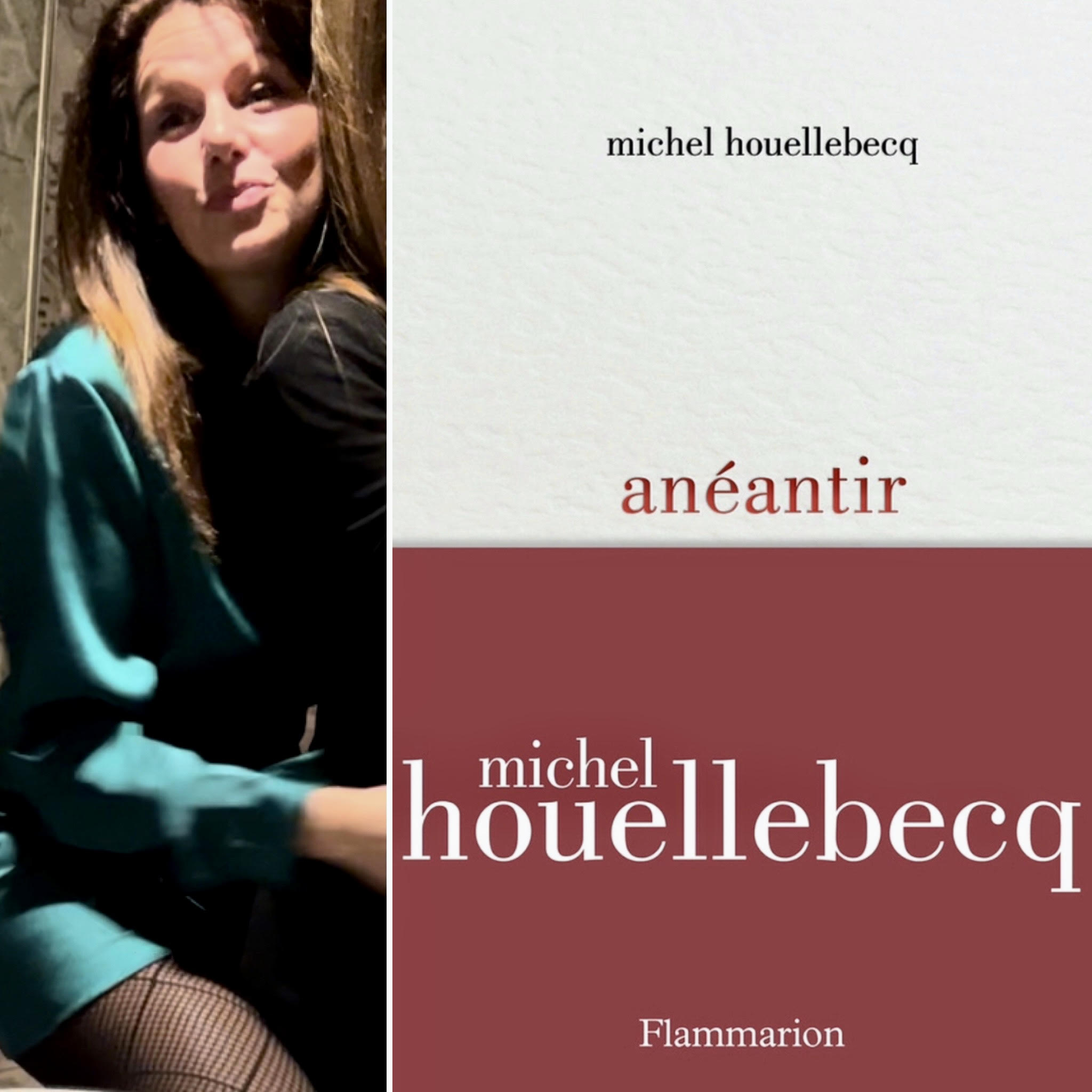
I just finished the 600-something page book „Anéantir“ from one of my top European authors and intellectuals, Michel Houellebecq.

unnamed (12)

If you haven’t read „A Houellebecq“ yet, I urge you to do so, but don’t start with his last book, Anéantir. On one side, it’s typical, but on the other, it’s too soft for what we are used to reading. Also, maybe it’s his most politically correct book, for so many reasons:

  • Does he make peace with Christendom?
  • Does he have cancer (because he smoked himself to death) and is he prepared to die?
  • What’s all about this suicide theme? That is quite new.
  • And how come he has regular sex with his regular partner (and seems to also like it)?

Of course, elderly women are discarded from his worldview. Every man has a second woman who is younger and more dedicated to him. This is quite boring, but is this what men really want and dream about? We should face that.

Then there’s politics, which is also tedious and only interesting from an observation standpoint. Maybe he just wants to put a mirror in front of us.

And there is death, death everywhere: sick people, normal people preparing to die, and the thought of suicide as a way out of problems.

If I didn’t love and admire him like a groupie, I’d say I’m glad he wrote a different (but similar) book, that his style and lexical choices – especially the adjectives – demonstrate such a sublime command of the French language in a way that touched me in this book as well.

He is a one-of-a-kind writer and avant-gardist, one of the last living intellectuals in Europe, but is he preparing to die? If yes, I would really like to meet him. If you’re reading this, Houellebecq, let’s get drunk together!

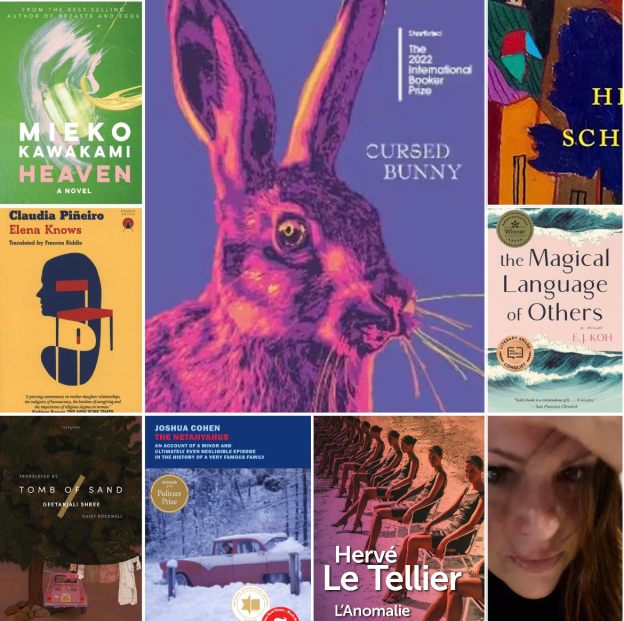
I have compiled a list of books that will keep me well occupied until Christmas and maybe into 2023. Feel free to get inspired.

Have a good time until we next speak in 2023!

unnamed (14)unnamed (2)

unnamed (3)unnamed (4)

unnamed (5)unnamed (6)unnamed (7)unnamed

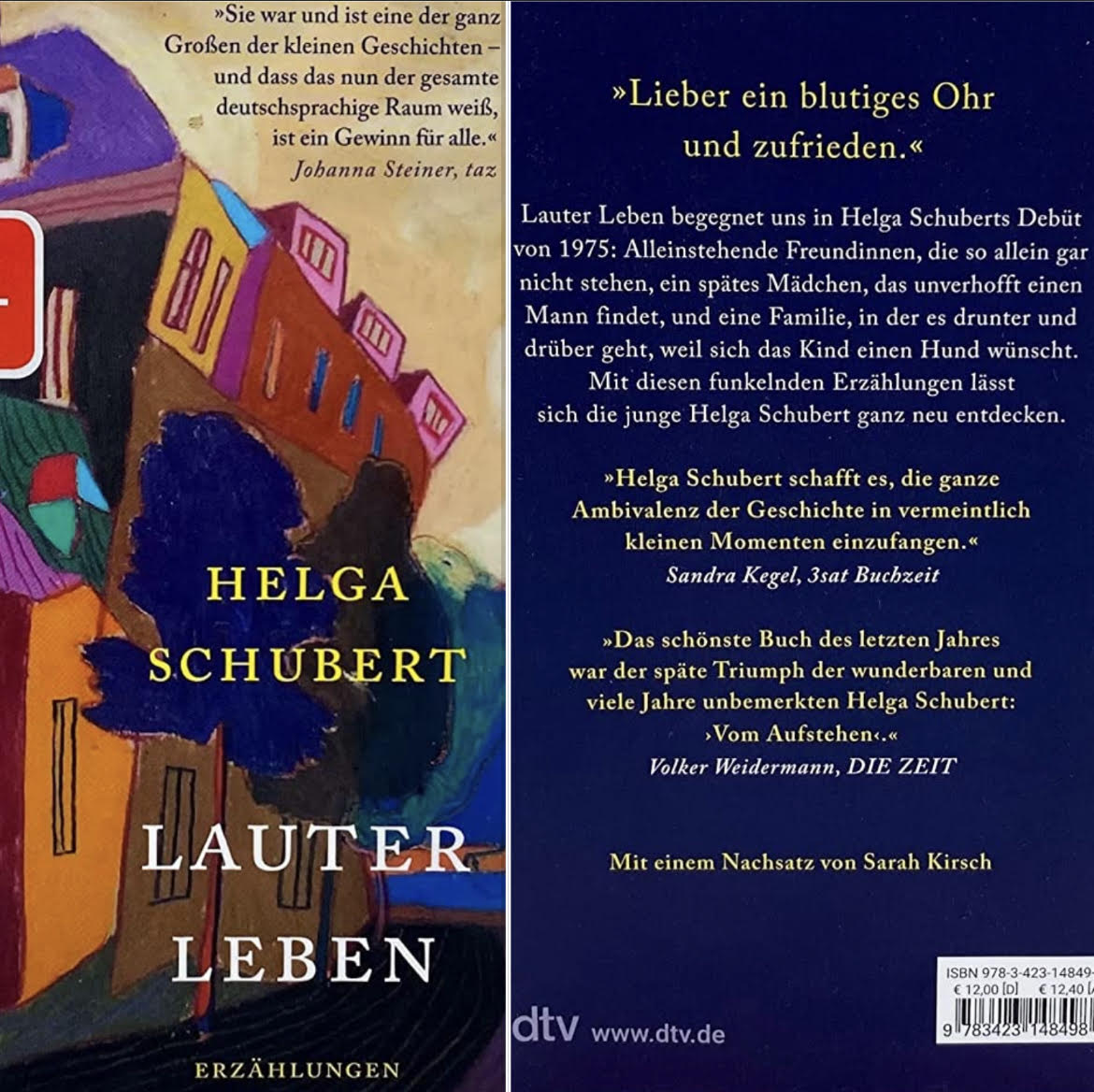
„Vom Aufstehen“ (in der unendlichen, eisigen Welt) – Helga Schubert

Das beste deutschsprachige Buch, das ich seit vielen Jahren gelesen habe.

Es gibt sehr viele Autoren, die sich mit der deutsch-deutschen Geschichte beschäftigen und dementsprechend eine Flut an einschlägigen Büchern – aber es gibt keinen Schriftsteller, der es bisher geschafft hat, eine Geschichte zu erzählen, sodass die Geschichte eines zweigeteilten Landes zu einer Art Bühnenbild wird. Dieser Aufbau ist genial.

Helga Schubert erzählt ihre Lebensgeschichte, und sie hat viel zu sagen. Ihre Formulierungen sind verständlich, schlicht, klassisch-edel. Die Sprache dient als Transportmittel von Inhalt (Form follows Function), als wirkendes Konstrukt.

Ich konnte das Buch nicht weglegen. Ein wahrer Schatz der deutschsprachigen Literatur, und genau deshalb wurde es 2021 mit dem Bachmann-Preis gewürdigt.

Ein Buch einer 80-jährigen Frau, in Einzelepisoden erzählt. Eine persönliche aber gleichzeitig deutsch-deutsche Geschichte. Die Geschichte einer außergewöhnlichen Frau, Psychologin, Widerstandskämpferin und begnadeten Erzählkünstlerin.

Vor 40 Jahren war Helga Schubert bereits für den Bachmann-Preis nominiert, aber sie „durfte“ damals nicht aus der DDR ausreisen. Sie war für viele weitere Preise nominiert, durfte/konnte sie aber als DDR-Schriftstellerin nicht annehmen. Sie schrieb weiter, und ich freue mich bereits auf das im September herauskommende neue Buch („Lauter Leben“) von ihr, denn am liebsten möchte ich nicht aufhören, Helga Schubert zu lesen.

Warum ist “Vom Aufstehen” ein MUST-READ?

  • Weil es einen hoch komplexen politisch-geschichtlichen Kontext auf schlichte Weise darlegt, en passant, weil es eine andere Geschichte in den Vordergrund stellt: Die Geschichte darüber, eine lieblose, kalte Mutter zu haben, die einen ein Leben lang spüren lässt, dass man ihrer Gnade wegen lebt.
  • Es ist die Geschichte vom Überleben, vom Aufstehen, Tag um Tag „in der unendlichen, eisigen Welt“, es geht um Ehe, Scheidung, erneute Ehe, Menschen und Geschehnisse, in einer Welt, in der man „die Tochter seiner Mutter“ ist – mal mit mehr mal mit weniger Kummer.
  • Es geht darum, 80 Jahre geduldig zu warten, bis man all dies aufschreiben kann.
  • Es geht um Diktaturen und darum, in und mit ihnen zu überleben.
  • Es geht darum, sein Schicksal anzunehmen, manchmal mit Mut, manchmal mit fatalistischer Haltung. Es geht aber auch darum, immer wieder, aufstehend, Widerstand zu leisten, im Kontext eines Regimes, in dem Helga Schubert von der Stasi überwacht wurde. Ihr wurde viel genommen. Uns beschenkt sie, heute dafür mit deutscher Literatur vom Allerfeinsten.
  • Es geht darum, sich so zu sehen, wie man ist, nicht wie man gerne sein möchte. Und es geht um Hoffnung und Trost, denn es ist immer jemand da, von dem man verstanden wird und Liebe erfährt. Helga Schubert spricht von der Gewissheit, dass es stets eine Lösung gibt, egal unter welchen Umständen man aufwächst. Und sie tut das ohne besserwisserisch zu sein, mit der Weisheit einer alten Frau.

„Alles gut“, so ihr letzter Satz.

L’ossessione di voler dare per forza un nome a tutto

Ultimamente mi capita spesso di riflettere sulla nostra ossessione di voler dare per forza un nome a tutto: questa è una guerra; no, non è una guerra, è un’invasione; costui è un criminale, quest’altro un guerrafondaio, ecc.

Sembriamo tutti così saccenti e arroganti, assieme ai giornalisti, che non ci aiutano a capire e a riflettere: sempliciotti e superficiali. Con i loro scritti che lasciano il tempo che trova. Mentre noi ci informiamo in rete, rivendicando di essere gli unici privilegiati ad aver trovato le fonti oneste, serie e veritiere.

Ragionando su questo mi è venuta in mente una poesia di Rainer Maria Rilke del 1899 („Ich fürchte mich so vor der Menschen Wort“), che ho tentato di interpretare in chiave contemporanea, facendola mia, con l’intento di condividerla con i più giovani, che magari in tutto questo macello degli ultimi anni non ci stanno capendo più nulla e stanno iniziando a perdere definitivamente la loro stima per noi “adulti”.

Voi, cosa ne pensate?

WORK-ETHICS or This is what drives me when it comes to Editing and Revision

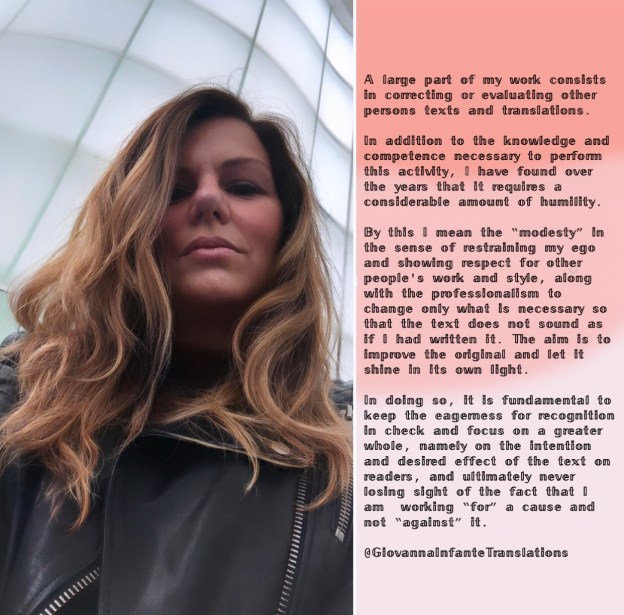
𝔸 𝕝𝕒𝕣𝕘𝕖 𝕡𝕒𝕣𝕥 𝕠𝕗 𝕞𝕪 𝕨𝕠𝕣𝕜 𝕔𝕠𝕟𝕤𝕚𝕤𝕥𝕤 𝕚𝕟 𝕔𝕠𝕣𝕣𝕖𝕔𝕥𝕚𝕟𝕘 𝕠𝕣 𝕖𝕧𝕒𝕝𝕦𝕒𝕥𝕚𝕟𝕘 𝕠𝕥𝕙𝕖𝕣 𝕡𝕖𝕣𝕤𝕠𝕟𝕤 𝕥𝕖𝕩𝕥𝕤 𝕒𝕟𝕕 𝕥𝕣𝕒𝕟𝕤𝕝𝕒𝕥𝕚𝕠𝕟𝕤.
𝕀𝕟 𝕒𝕕𝕕𝕚𝕥𝕚𝕠𝕟 𝕥𝕠 𝕥𝕙𝕖 𝕜𝕟𝕠𝕨𝕝𝕖𝕕𝕘𝕖 𝕒𝕟𝕕 𝕔𝕠𝕞𝕡𝕖𝕥𝕖𝕟𝕔𝕖 𝕟𝕖𝕔𝕖𝕤𝕤𝕒𝕣𝕪 𝕥𝕠 𝕡𝕖𝕣𝕗𝕠𝕣𝕞 𝕥𝕙𝕚𝕤 𝕒𝕔𝕥𝕚𝕧𝕚𝕥𝕪, 𝕀 𝕙𝕒𝕧𝕖 𝕗𝕠𝕦𝕟𝕕 𝕠𝕧𝕖𝕣 𝕥𝕙𝕖 𝕪𝕖𝕒𝕣𝕤 𝕥𝕙𝕒𝕥 𝕚𝕥 𝕣𝕖𝕢𝕦𝕚𝕣𝕖𝕤 𝕒 𝕔𝕠𝕟𝕤𝕚𝕕𝕖𝕣𝕒𝕓𝕝𝕖 𝕒𝕞𝕠𝕦𝕟𝕥 𝕠𝕗 𝕙𝕦𝕞𝕚𝕝𝕚𝕥𝕪.
𝔹𝕪 𝕥𝕙𝕚𝕤 𝕀 𝕞𝕖𝕒𝕟 𝕥𝕙𝕖 “𝕞𝕠𝕕𝕖𝕤𝕥𝕪” 𝕚𝕟 𝕥𝕙𝕖 𝕤𝕖𝕟𝕤𝕖 𝕠𝕗 𝕣𝕖𝕤𝕥𝕣𝕒𝕚𝕟𝕚𝕟𝕘 𝕞𝕪 𝕖𝕘𝕠 𝕒𝕟𝕕 𝕤𝕙𝕠𝕨𝕚𝕟𝕘 𝕣𝕖𝕤𝕡𝕖𝕔𝕥 𝕗𝕠𝕣 𝕠𝕥𝕙𝕖𝕣 𝕡𝕖𝕠𝕡𝕝𝕖’𝕤 𝕨𝕠𝕣𝕜 𝕒𝕟𝕕 𝕤𝕥𝕪𝕝𝕖, 𝕒𝕝𝕠𝕟𝕘 𝕨𝕚𝕥𝕙 𝕥𝕙𝕖 𝕡𝕣𝕠𝕗𝕖𝕤𝕤𝕚𝕠𝕟𝕒𝕝𝕚𝕤𝕞 𝕥𝕠 𝕔𝕙𝕒𝕟𝕘𝕖 𝕠𝕟𝕝𝕪 𝕨𝕙𝕒𝕥 𝕚𝕤 𝕟𝕖𝕔𝕖𝕤𝕤𝕒𝕣𝕪 𝕤𝕠 𝕥𝕙𝕒𝕥 𝕥𝕙𝕖 𝕥𝕖𝕩𝕥 𝕕𝕠𝕖𝕤 𝕟𝕠𝕥 𝕤𝕠𝕦𝕟𝕕 𝕒𝕤 𝕚𝕗 𝕀 𝕙𝕒𝕕 𝕨𝕣𝕚𝕥𝕥𝕖𝕟 𝕚𝕥. 𝕋𝕙𝕖 𝕒𝕚𝕞 𝕚𝕤 𝕥𝕠 𝕚𝕞𝕡𝕣𝕠𝕧𝕖 𝕥𝕙𝕖 𝕠𝕣𝕚𝕘𝕚𝕟𝕒𝕝 𝕒𝕟𝕕 𝕝𝕖𝕥 𝕚𝕥 𝕤𝕙𝕚𝕟𝕖 𝕚𝕟 𝕚𝕥𝕤 𝕠𝕨𝕟 𝕝𝕚𝕘𝕙𝕥.
𝕀𝕟 𝕕𝕠𝕚𝕟𝕘 𝕤𝕠, 𝕚𝕥 𝕚𝕤 𝕗𝕦𝕟𝕕𝕒𝕞𝕖𝕟𝕥𝕒𝕝 𝕥𝕠 𝕜𝕖𝕖𝕡 𝕥𝕙𝕖 𝕖𝕒𝕘𝕖𝕣𝕟𝕖𝕤𝕤 𝕗𝕠𝕣 𝕣𝕖𝕔𝕠𝕘𝕟𝕚𝕥𝕚𝕠𝕟 𝕚𝕟 𝕔𝕙𝕖𝕔𝕜 𝕒𝕟𝕕 𝕗𝕠𝕔𝕦𝕤 𝕠𝕟 𝕒 𝕘𝕣𝕖𝕒𝕥𝕖𝕣 𝕨𝕙𝕠𝕝𝕖, 𝕟𝕒𝕞𝕖𝕝𝕪 𝕠𝕟 𝕥𝕙𝕖 𝕚𝕟𝕥𝕖𝕟𝕥𝕚𝕠𝕟 𝕒𝕟𝕕 𝕕𝕖𝕤𝕚𝕣𝕖𝕕 𝕖𝕗𝕗𝕖𝕔𝕥 𝕠𝕗 𝕥𝕙𝕖 𝕥𝕖𝕩𝕥 𝕠𝕟 𝕣𝕖𝕒𝕕𝕖𝕣𝕤, 𝕒𝕟𝕕 𝕦𝕝𝕥𝕚𝕞𝕒𝕥𝕖𝕝𝕪 𝕟𝕖𝕧𝕖𝕣 𝕝𝕠𝕤𝕚𝕟𝕘 𝕤𝕚𝕘𝕙𝕥 𝕠𝕗 𝕥𝕙𝕖 𝕗𝕒𝕔𝕥 𝕥𝕙𝕒𝕥 𝕀 𝕒𝕞  𝕨𝕠𝕣𝕜𝕚𝕟𝕘 “𝕗𝕠𝕣” 𝕒 𝕔𝕒𝕦𝕤𝕖 𝕒𝕟𝕕 𝕟𝕠𝕥 “𝕒𝕘𝕒𝕚𝕟𝕤𝕥” 𝕚𝕥.